
Small-scale farming demands tools that are reliable, efficient, and adaptable to tight budgets and varied terrain.
This guide walks through the decisions that matter most when selecting equipment, from engine type and attachments to real-world maintenance and safety tips.
If you want a machine that eases labor, extends planting windows, and quietly pays for itself season after season, read on.
Why a compact tilling solution transforms small farms
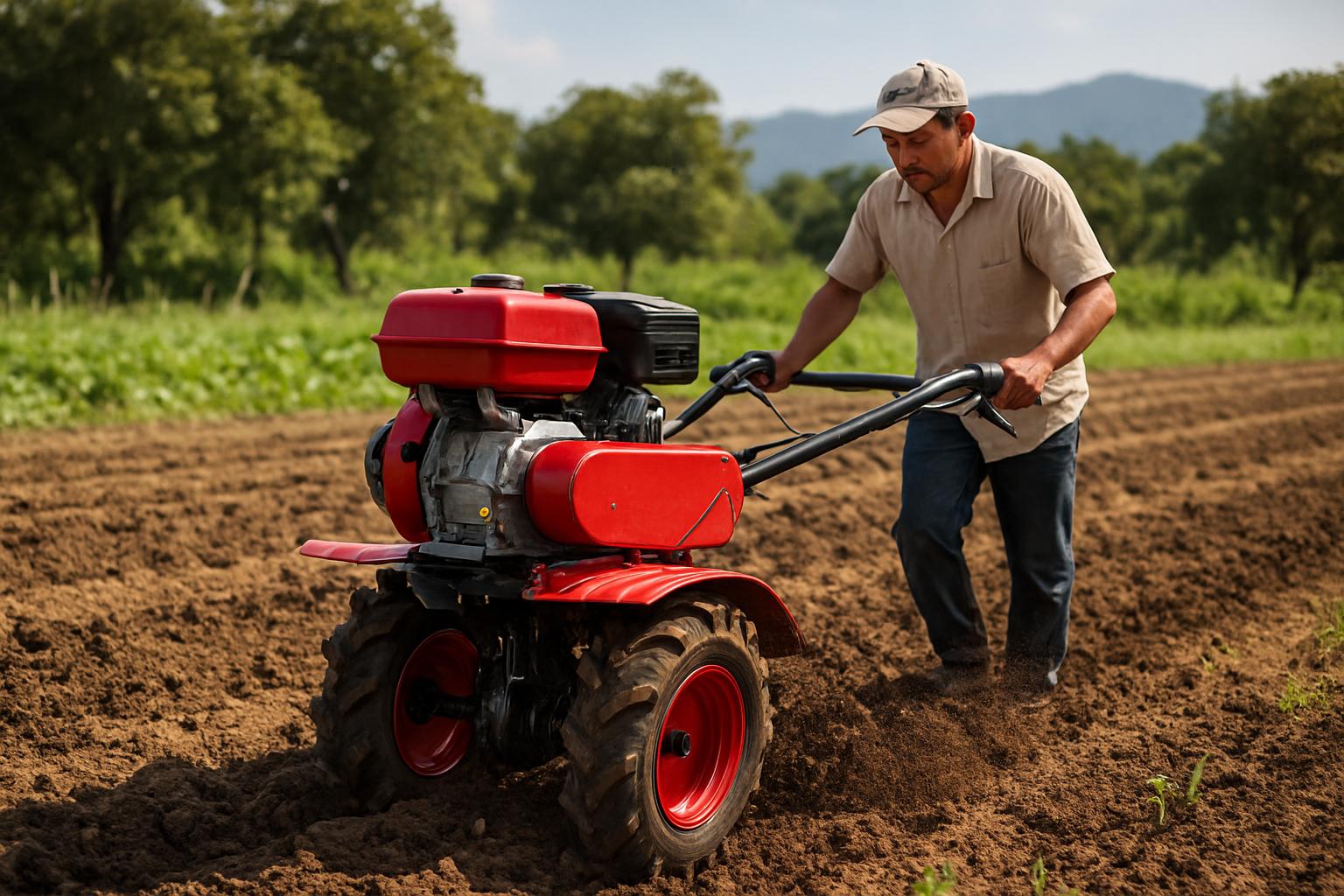
Tilling is the quiet backbone of many planting seasons: it prepares seedbeds, mixes organic matter, and helps control weeds before they get out of hand.
A well-chosen power tiller machine cuts the hours farmers spend with hoes and manual tools, freeing time for crop care and market work.
Beyond labor savings, the right unit improves soil contact for seeds and can help small plots reach much higher productivity per hour worked.
Matching tasks to machine capabilities
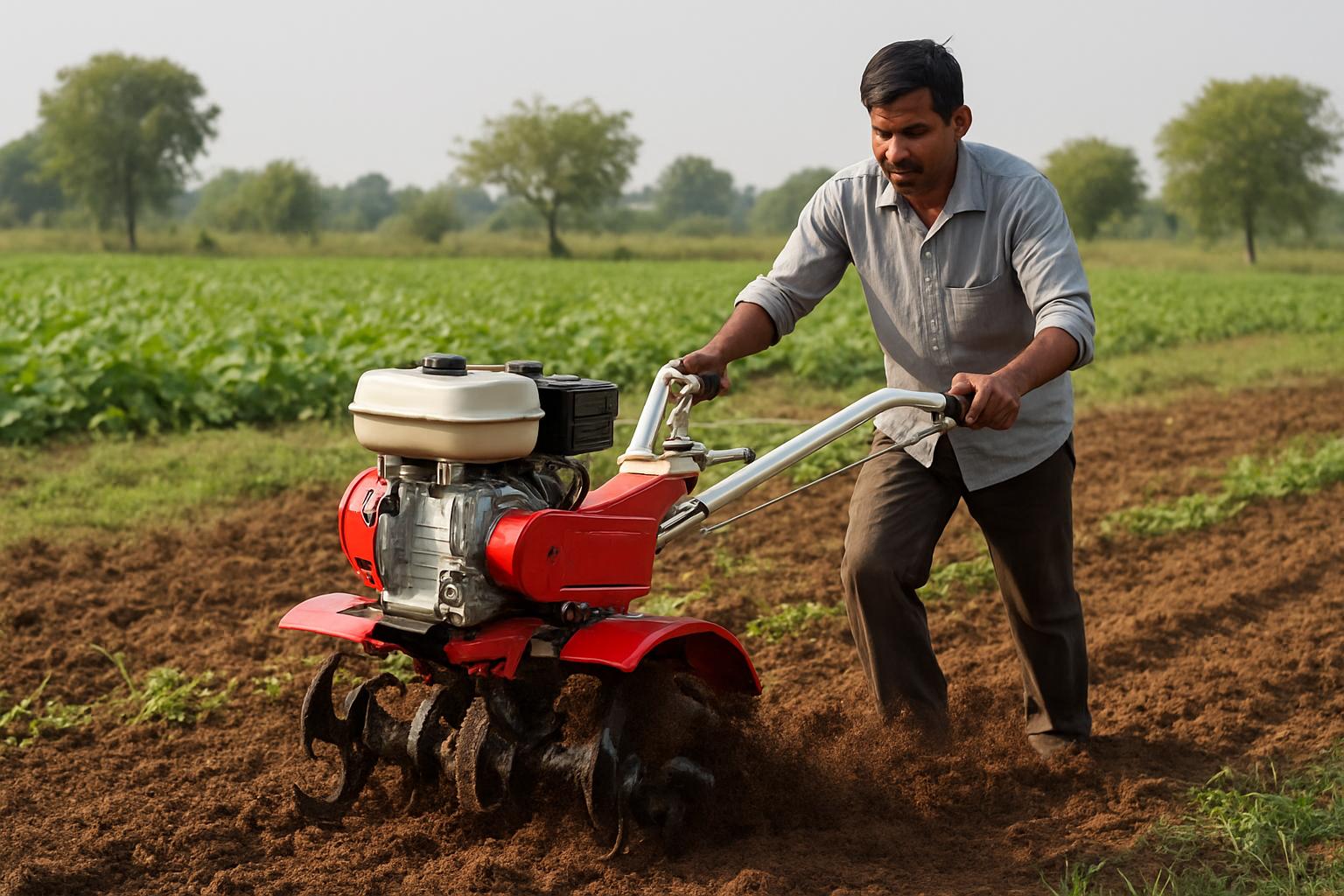
First, list the farm’s primary tasks: seedbed preparation, row cultivation, furrowing, inter-row weeding, or hauling small trailers.
Each task pulls differently on the machine: a mini power tiller excels at quick bed prep and weeding between rows, while heavier two-wheel tractors handle plowing and trailer work.
Prioritizing tasks helps avoid buying a tool that’s too weak—or spending on a heavy unit that wastes fuel and complicates maneuvering.
Essential features to evaluate
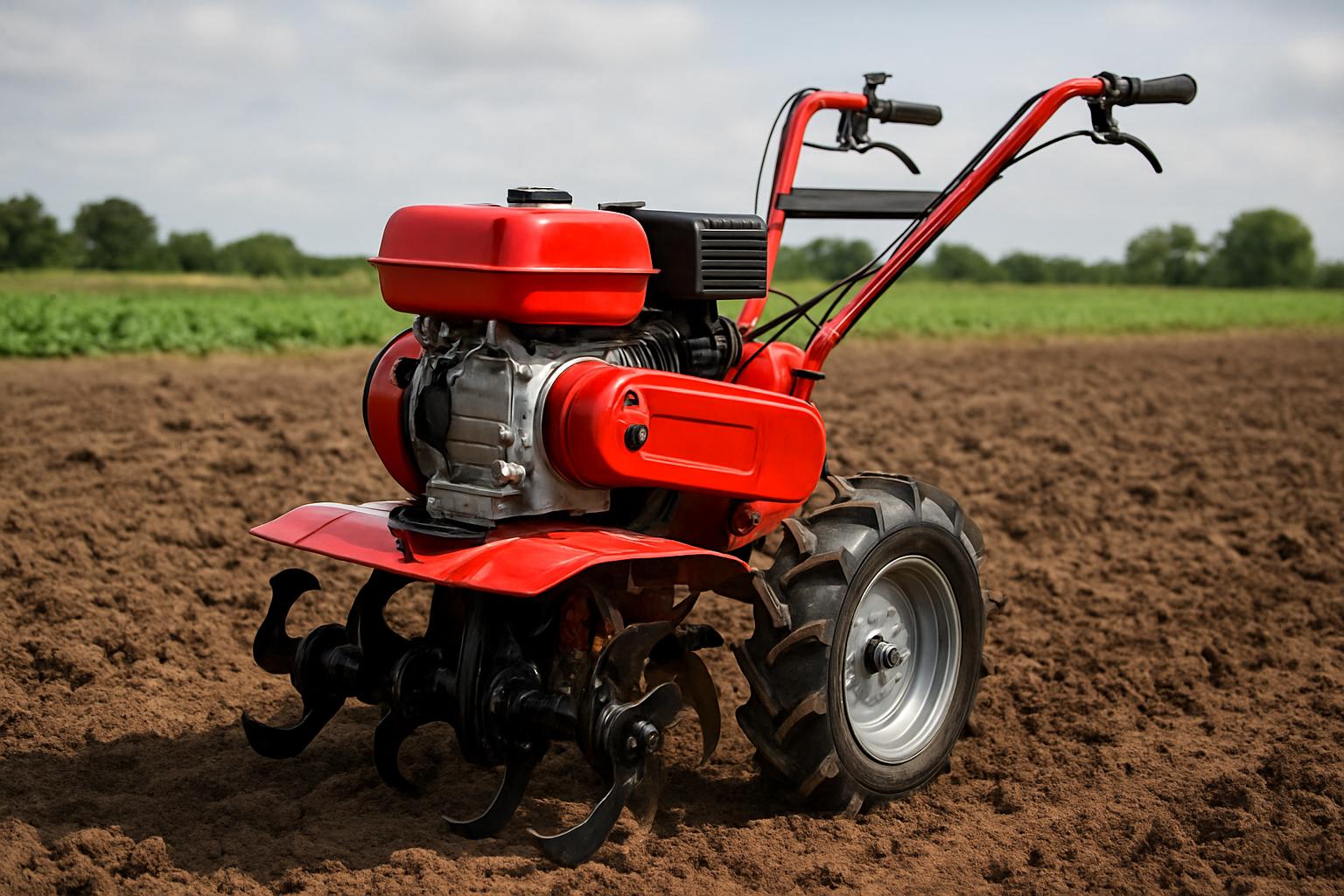
When you compare machines, focus on engine power, transmission type, tine arrangement, tilling width, and available attachments.
Durability of the frame, quality of bearings, and ease of accessing service points are often more important than flashy extras.
Also consider overall footprint: a narrow, agile machine reduces crop damage in tight beds while wider machines cover ground faster in open plots.
Engine power and torque
Power and torque determine not just how quickly a machine tills, but how well it handles tough, compacted soils and steep beds.
Diesel engines deliver generous low-end torque, which is why many small farmers prefer a diesel tiller for heavier tasks or clay soils.
Conversely, petrol engines are lighter and often simpler to start in cold weather, though they may lack torque at low RPMs compared with diesel units.
Transmission and gear options
Simple belt-driven machines are cheaper and easier to maintain, while gear or hydrostatic transmissions give precise control and sturdiness under load.
Multiple forward and reverse gears let you match ground speed to soil conditions, improving finish and fuel efficiency.
For row crops and delicate beds, a transmission that allows very slow forward movement without stalling is a valuable feature.
Tines, tilling depth, and width
Tine design—curved, L-shaped, or paddle—affects soil turnover and pull on the engine; choose tines suited to your soil type and crop spacing.
Adjustable depth control keeps the tiller from digging too deep and disturbing moisture profiles, which is important for conservation-minded farmers.
Interchangeable tine sets or adjustable widths let you use the same machine for bed preparation and later light cultivation between rows.
Weight, balance, and maneuverability
Too-light machines can bounce off hard ground or become airborne on heavy soil, while overweight units are hard to maneuver and cause compaction.
Look for a chassis with good balance and a low center of gravity; this makes steering easier and reduces the chance of tip-over on slopes.
Telescoping handles and adjustable grip positions make long hours less fatiguing and improve control around trees or irrigation lines.
Attachment ecosystem and versatility
An agriculture tiller that accepts multiple attachments—plows, ridgers, seeders, trailers—repays its cost with seasonal utility.
Check whether attachments are proprietary or standardized; standardized quick-hitches make sourcing spare parts and add-ons easier.
Even small farms benefit from a model that can switch between bed prep, seeding, and light transport without specialized tools.
Fuel type: diesel tiller versus petrol options
Diesel tillers are fuel-efficient and deliver strong torque at low revs, making them suited to heavier soils and extended daily use.
Petrol machines often start more readily in cold conditions and can be lighter, but they typically consume more fuel under heavy load.
Consider fuel availability on or near the farm, the cost per liter, and local regulations when choosing between diesel and petrol powerplants.
Ease of maintenance and service access
Regular service—oil changes, air cleaner checks, and tine sharpening—determines a machine’s long-term reliability more than brand prestige.
Machines with accessible filters, clear grease points, and straightforward belt tensioners reduce downtime and mechanic bills.
Ask local mechanics which brands they know; common models with local parts networks are cheaper and faster to keep running.
Types of tillers and which suits your operation
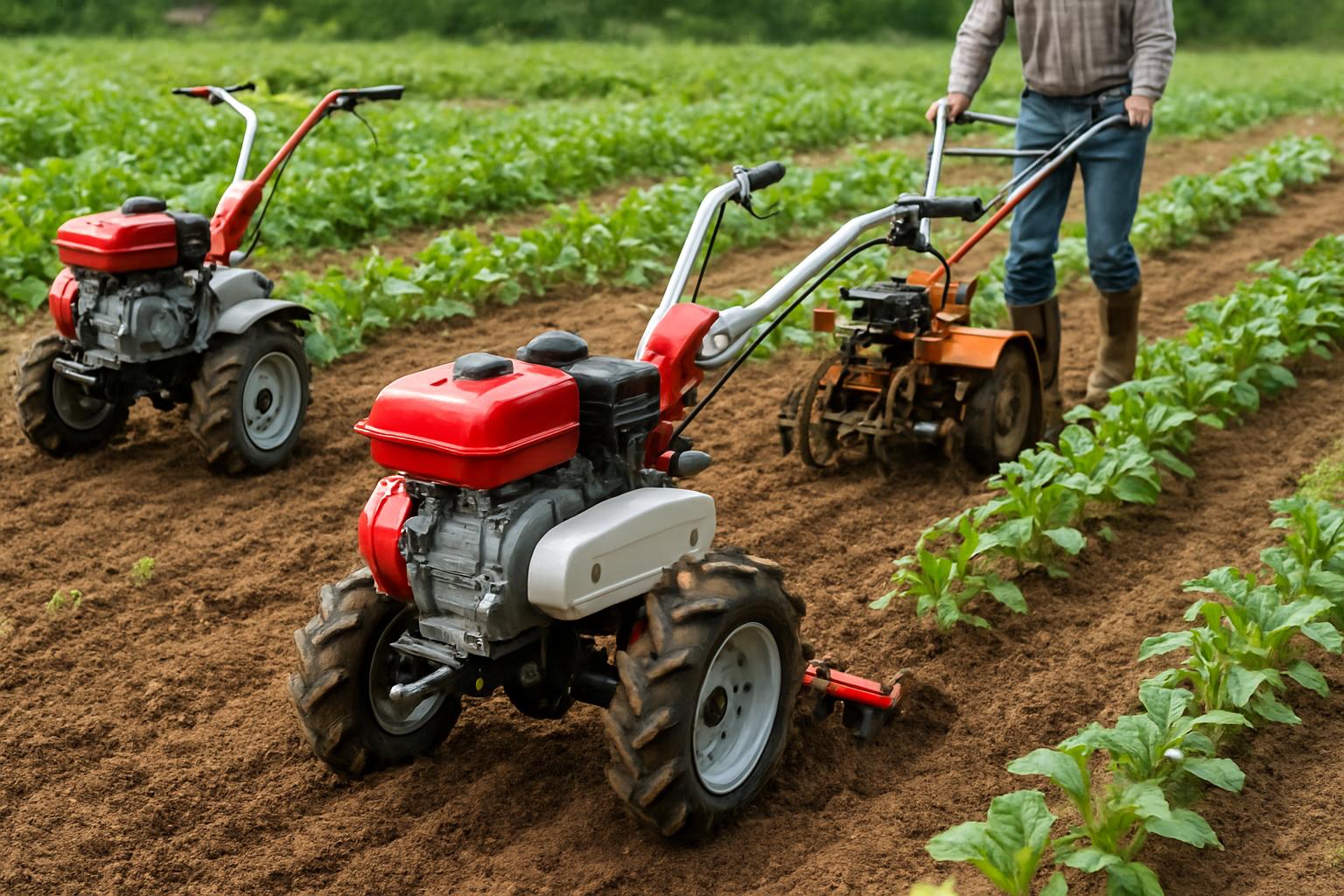
There are broadly three useful categories for small farms: compact walk-behind tillers, two-wheel power tillers, and multi-functional two-wheel tractors.
Each offers a balance between mobility, power, and attachment capability; your choice should reflect the plot layout and crops grown.
Below I break them down into practical comparisons to make the decision easier.
Compact walk-behind tillers
Compact walk-behind models are lightweight, simple to use, and ideal for small kitchen gardens and narrow beds.
They often come as petrol-powered units that provide quick, shallow cultivation and are easy to start with minimal maintenance.
For gardeners and very small family farms, a compact machine is a cost-effective way to reduce hand labor without committing to heavy equipment.
Mini power tiller and two-wheel tractors
A mini power tiller bridges the gap between garden tools and utility tractors, offering attachment capability in a small package.
These machines typically accept plows, seeders, and trailers and can handle larger plots, gentle slopes, and light transport tasks.
They are a favorite among smallholders who need a single machine to do multiple chores and prefer a compact footprint for storage.
Full-size power tiller machines and two-wheel tractors
Full-size two-wheel tractors deliver more horsepower, heavier gearboxes, and a broader attachment selection for serious small farms.
They are suited to farms that cultivate several acres, manage seasonal demands, or grow root crops that need deeper tillage.
While pricier and heavier, these machines reduce dependency on hired labor and can become the workhorse for a micro-farm operation.
Buying considerations: what to evaluate during inspections
When you inspect a candidate tiller, listen, look, and test under realistic conditions rather than accepting appearance alone.
Start the engine cold, check for oil leaks, observe vibration levels, and run the tines in soil similar to what you normally cultivate.
Assess controls, handle comfort, and how the machine responds when reversing or in firm ground—these practical tests reveal durability and operator comfort.
What to ask the seller
Ask about warranty coverage, which parts wear fastest, availability of replacement tines, and whether local service is offered.
Request a maintenance log if buying used and verify whether any modifications have been made that might affect reliability.
If the seller cannot answer simple questions about maintenance intervals, consider that a red flag—good sellers are informed and transparent.
New vs. used: balancing risk and cost
New machines carry warranties and predictable service intervals, while used units are cheaper but often hide deferred maintenance costs.
If budget is tight, prioritize used units with documented maintenance and original parts rather than a cheap-looking salvage job.
Buying from a local farmer or co-op where machines have been used in similar conditions reduces the chance of unpleasant surprises.
Budget planning and cost of ownership
Purchase price is just the starting figure; fuel, maintenance, spare parts, and occasional professional servicing add to the annual cost.
Estimate hours of use per season and calculate cost per hour by including fuel and routine parts such as belts and tines.
Often a diesel tiller has a higher upfront price but lower cost per hour over its useful life due to fuel economy and durability.
Financing, resale value, and community options
Consider staggered payments or microfinance options if available—spreading cost over planting seasons often makes adoption feasible.
Resale value is higher for well-maintained, widely supported brands; this matters if you plan to upgrade in a few years.
Also look into tool-sharing cooperatives, rental services, or local hiring pools that let several farmers share one quality machine.
Safety and ergonomics
A machine that’s comfortable and safe reduces operator fatigue and accident risk across long planting seasons.
Check for clear kill switches, effective shielding around moving parts, and handles that absorb vibration adequately.
Wear hearing protection, eye protection, and sturdy boots when operating any tiller; children should be clear of working areas at all times.
Slope and obstacle handling
Never underestimate slope dynamics: a well-balanced machine with a low center of gravity feels stable up to moderate inclines.
On steep or terraced plots, consider lighter machines or manual techniques for narrow benches to avoid tipping and soil displacement.
For fields with rocks or hidden irrigation lines, shallow, multiple passes are safer than one deep pass that can catch and flip a tiller.
Maintenance schedule and easy fixes you can do yourself
Establish a simple maintenance calendar: check oil and fuel filters monthly during use, sharpen or replace tines seasonally, and inspect belts frequently.
Lubricate bearings and pivot points every 25-50 hours of operation, depending on dusty conditions and manufacturer’s guidance.
Learn a handful of preventive tasks—cleaning air filters, adjusting belt tension, and changing oil—and you’ll cut downtime and extend machine life.
Common roadside repairs
Fixing a torn belt, replacing a shear bolt, or tightening a loose axle are manageable on-farm repairs that save a trip to the shop.
Carry a small service kit with spare belts, shear bolts, a basic wrench set, and an extra fuel filter during the busy season.
Documenting repairs in a simple log helps track recurring issues and signals when a more serious overhaul is due.
Real-life examples from small farms
I worked with a five-acre vegetable grower who switched from rented rototillers to a mini power tiller one spring and saw immediate improvements.
By reducing bed-prep time by half and using ridge and seeder attachments, their crew could plant more diversity and increase yield per bed.
Another neighbor invested in a diesel tiller with trailer capability and began offering hauling services on market days, turning the machine into a small income stream.
Checklist: choosing the right machine step by step
Begin by mapping your farm tasks, acreage, soil conditions, and storage space to narrow choices quickly.
Test candidates in representative soil, check for local parts support, and compare the real cost of ownership rather than headline prices.
Finally, prioritize safety features and ergonomic comfort—machines that tire you less will be used more effectively and for longer seasons.
Comparison table: how features typically vary by tiller class
| Feature | Compact walk-behind | Mini power tiller | Two-wheel tractor / full-size |
|---|---|---|---|
| Typical power source | Small petrol engine | Petrol or small diesel | Diesel |
| Primary strengths | Lightweight, inexpensive, nimble | Versatile, attachable, balanced | High torque, heavy work, broad attachment range |
| Best for | Home gardens, narrow beds | Small plots, mixed tasks, contractor use | Several-acre small farms, root crops, hauling |
| Typical maintenance | Simple, low-cost | Moderate, some parts availability | More complex, requires local service support |
Attachment guide: what you really need
Seeders, ridgers, plows, trailers, and rotary harrows are the most useful attachments for small farms and each adds distinct capability.
Start with a seeder or ridger if row crops dominate, and add a trailer for harvest and market transport to maximize machine utility.
Choose attachments with standardized mounts where possible to keep options open when you upgrade or sell the unit.
Seeders and planters
A precision seeder attachment transforms a tiller into a planting tool, saving seed and improving uniformity.
For small seeds like carrots and lettuce, a calibrated seeder reduces thinning labor and increases uniform germination.
Look for seeders with adjustable drop mechanisms and easy calibration for multiple crop types.
Plows, ridgers, and furrowers
Plows and ridgers let you form planting beds or trenches quickly and consistently, reducing manual labor during planting season.
They are especially useful for root crops and vegetable beds that require soil mounding or clean furrows for irrigation.
Durable steel construction and replaceable shares are features to prioritize for long life under rocky conditions.
Fuel and storage tips for longevity
Store fuel in approved containers away from heat sources and add stabilizer to petrol if the machine will sit for weeks between uses.
Diesel fuel can grow microbes in warm, humid conditions—use additives and keep tanks full or rotate fuel regularly to prevent contamination.
When storing for a season, clean the machine thoroughly, change oil if due, and lift tines slightly off the ground to avoid corrosion damage to blades and bearings.
How to train operators and pass on skills
Hands-on training sessions that cover starting, safe operation, obstacle management, and quick repairs bring the most value to any farm crew.
Create a short checklist to run through before every shift: fluid levels, glove and eye protection, and a quick functional test of controls.
Documenting simple how-to steps on a laminated card attached to the tiller reduces mistakes and shortens onboarding for new workers.
Sustainability and soil health considerations
Over-tilling can destroy soil structure and reduce organic matter, so practice minimal tillage when possible and focus on shallow passes for weed control.
Incorporating cover crop residues with a gentle pass or using tines that mix rather than pulverize soil helps preserve beneficial soil life.
Consider alternating mechanical cultivation with no-till beds in sensitive areas to balance weed control and long-term soil resilience.
Where to buy and how to negotiate
Buy from dealers who offer demonstration, warranty handling, and local parts stocking; these sellers provide far more post-sale value than online-only vendors.
When negotiating price, use the cost of necessary attachments and expected first-year service as legitimate levers to secure discounts or warranty extensions.
For used purchases, ask for a trial period or short-term return policy when possible, especially if the unit has been refurbished by a reseller.
Making the machine pay for itself
Track hours of use and calculate fuel and labor savings to see when the machine pays back its purchase price—a simple spreadsheet makes the math objective and clear.
Consider additional income streams such as contract tilling, seasonal hauling, or community rental programs to accelerate payback.
Keeping the machine in good condition also preserves resale value, which further lowers the net cost of ownership over time.
Final thoughts before you decide
Your ideal selection balances power, maneuverability, and the attachment ecosystem you’ll actually use rather than the biggest or newest model available.
Small farmers often find the best return on investment from a mid-range mini power tiller that is simple to service and versatile in attachments.
Whatever you choose, focus on machines with strong local support networks and parts availability—those practical choices keep farms productive season after season.
Over the years I’ve seen modest investments in the right equipment change the trajectory of small farms, creating time for crop planning and business growth.
When you pick a tiller that suits your soil, roster, and tasks, it becomes more than a tool—it becomes a partner in the field.
Take the time to test, ask local operators, and plan for maintenance; a careful choice now will deliver seasons of dependable service and quieter mornings at planting time.
